Paul Van Doren made shoes from whatever fabric customers brought into the shop. Customization wasn't a feature at Vans, it was the founding idea. But when we set out to rebuild Vans Customs for the digital era, we were starting from scratch. We had no existing platform, no playbook.
The standard approach was pre-rendered imagery: every part of every shoe, produced in every possible combination. We'd been doing it that way too. It was ok, but it wasn't anything special or anything the brand could own. Every new color meant a new render. Adding a shoe model could take months. The experience was static by design, and keeping it current was expensive and slow.
Vans needed more than a better looking customizer, we needed a foundation and a digital product that could keep inventing new ways to create on a shoe long after launch.
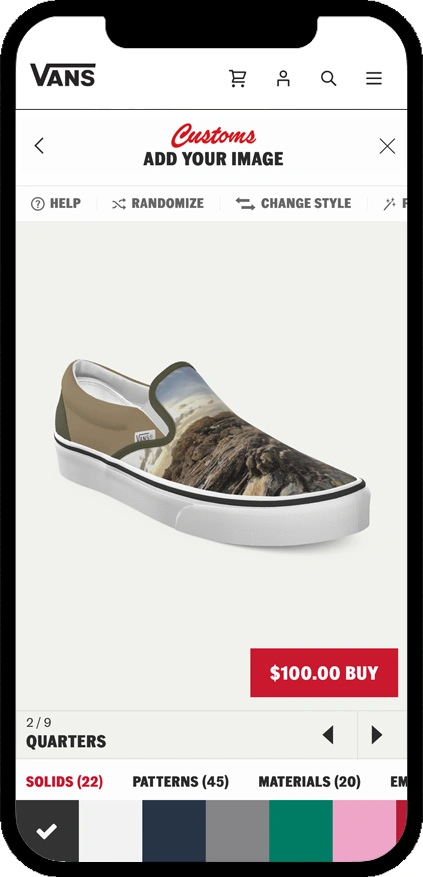
Instead of pre-rendering images, we built a real-time WebGL customizer, the first in footwear. Rotate, zoom, and design from every angle, watching your shoe change as you build it.
The hard part wasn't the technology. It was getting leadership comfortable betting on something nobody in the category had done. I built prototypes and proof of concepts until the experience was real enough to say yes to.
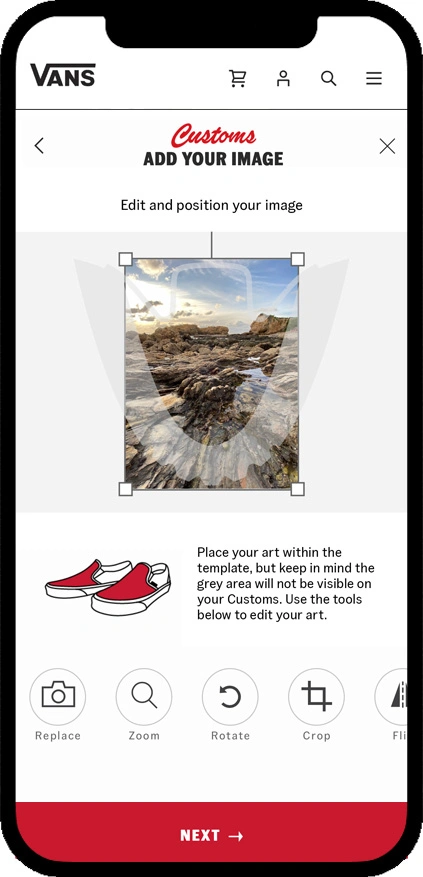
Real-time 3D unlocked tools a pre-rendered system could never support. People could upload their own photos and artwork and have it printed directly on the shoe. Checkerfy turned any uploaded image into a checkerboard print, so a personal photo came back looking unmistakably like Vans. A pattern builder let people design repeating prints from scratch, and a randomizer generated combinations for anyone who wanted to be surprised. None of it was in the original scope. All of it was possible because of the foundation we chose.
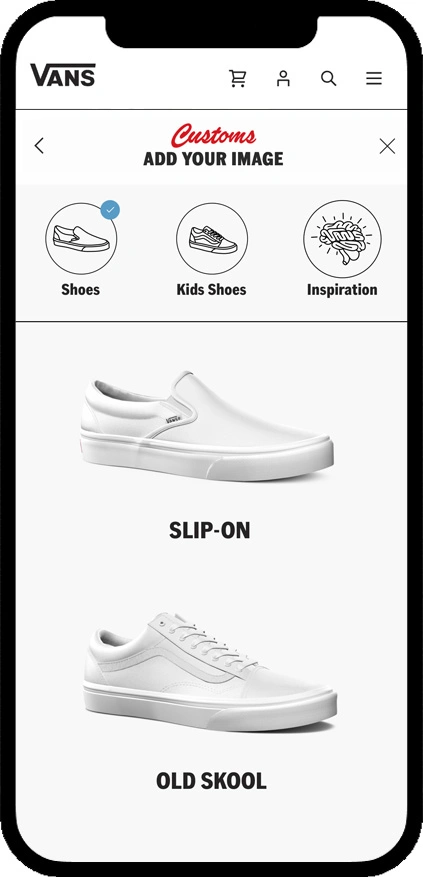
The 3D bet paid off everywhere it touched. Engagement and conversion grew double digits. New materials, colors, and models could be added without a production cycle. And a category first became a core commerce platform Vans could keep extending, tool by tool, market by market.
The foundation kept paying out in places we didn't plan for. Years later, the same platform powered the customizer inside Vans World on Roblox, putting creative self-expression in front of a whole new generation.