project //
Vans Customs
Overview
Vans has always been about creative self-expression. Paul Van Doren would make shoes from whatever fabric a customer brought into the shop. Customization wasn't a feature. It was a part of the brand DNA from the first day.
When we set out to rebuild Vans Customs for the digital era, we were starting from scratch. There was no existing platform to iterate on, no established playbook to follow. We had to define what digital customization at Vans should be before we could figure out how to build it.
That meant making a foundational choice early that shaped everything that followed.
The Direction
The standard approach to digital customization was pre-rendered imagery. Every customizable part of every shoe, photographed or rendered in every possible material, color, and print combination. Most brands were doing it this way. We had been doing it this way. It was ok, but wasn't anything special or anything the brand could truly own.
Every new color required a new render. Every new material meant a new production cycle. Adding a shoe model could take months. The experience was static by design, and keeping it current was expensive and slow.
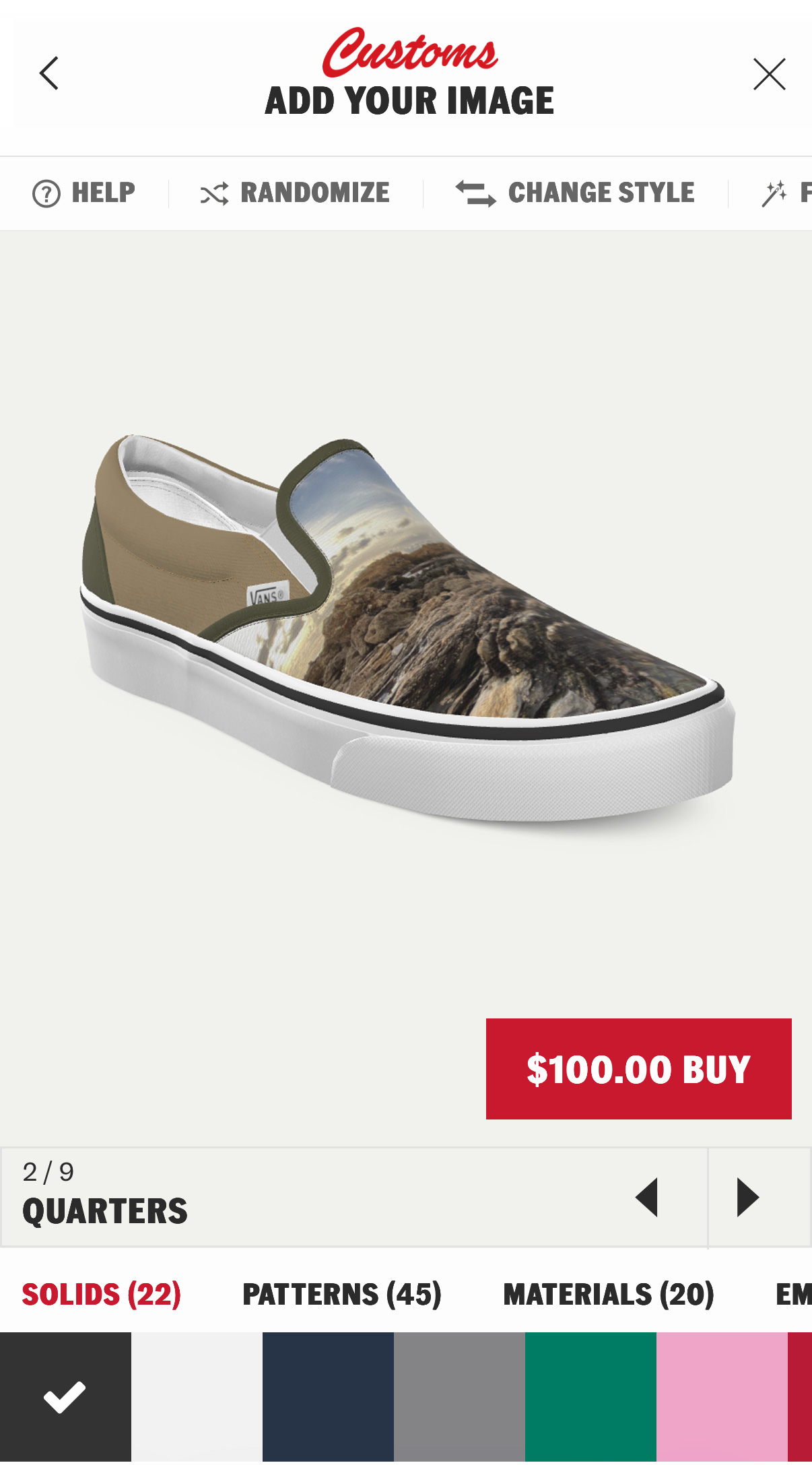
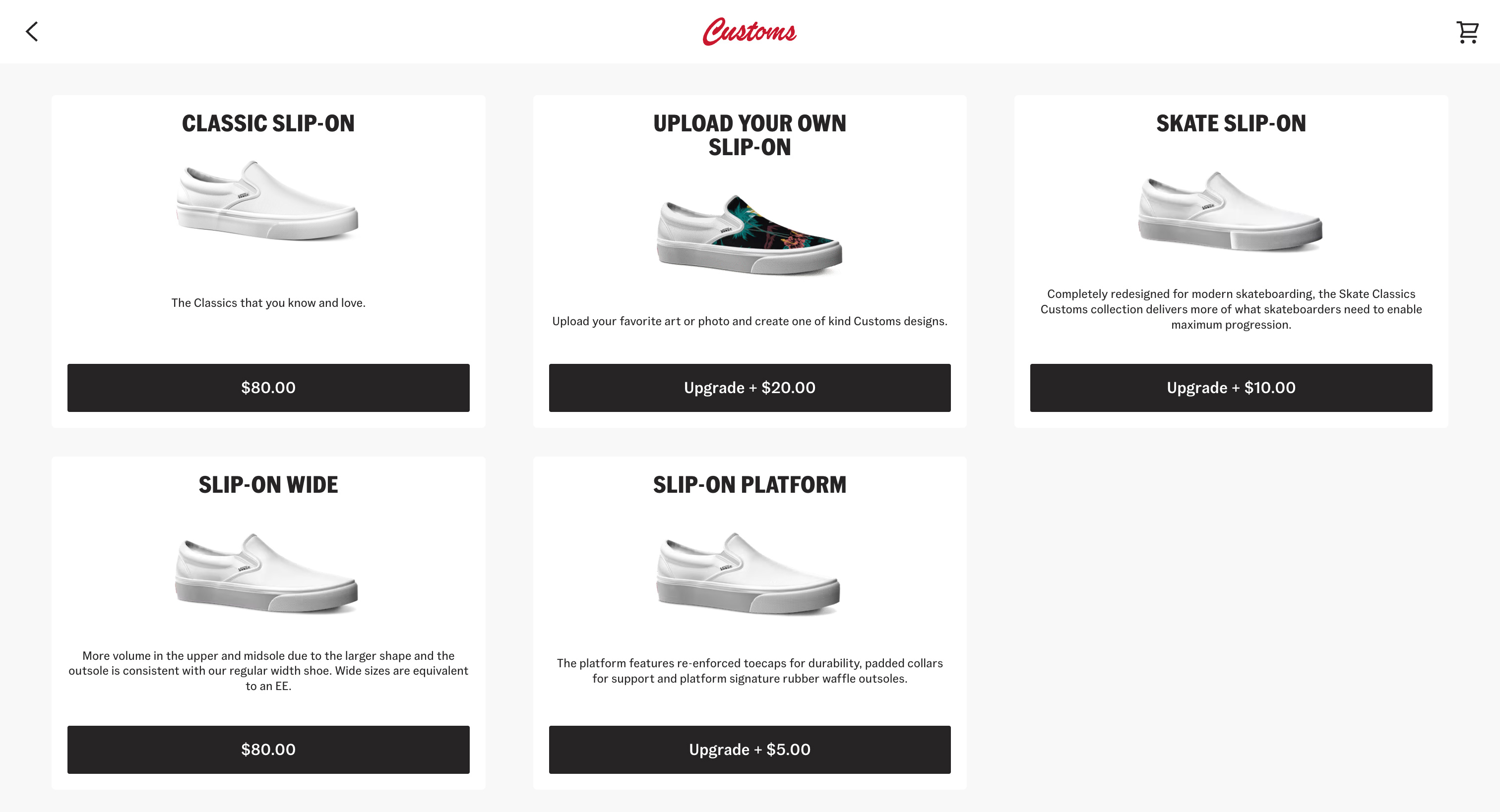
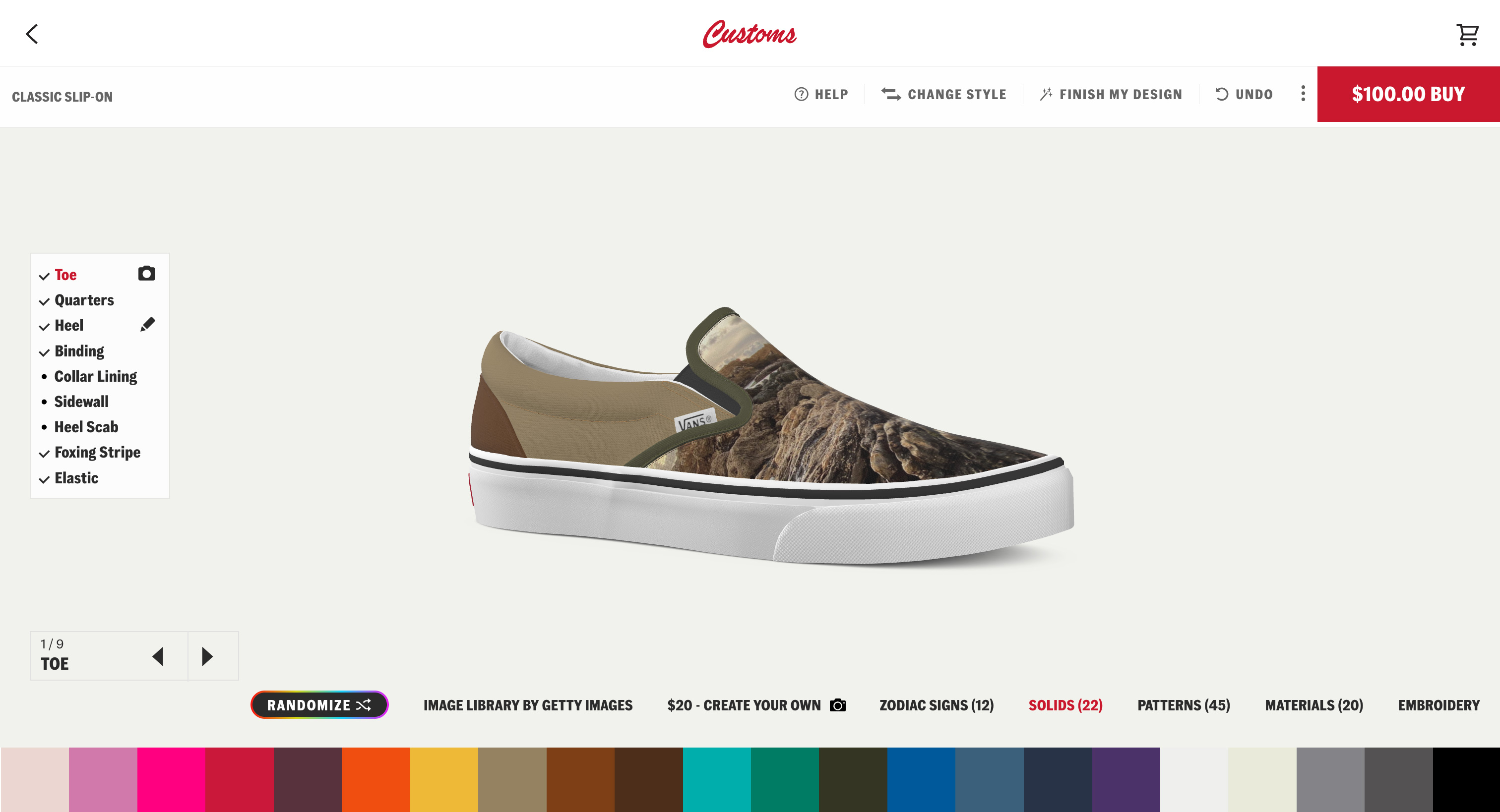
I pushed to go a different direction. Instead of pre-rendered images, we built a real-time WebGL 3D customizer, the first in the footwear category. Users could rotate, zoom, and design in real time, seeing exactly what they were creating from every angle as they built it.
The harder part wasn't the technology. It was getting executive leadership comfortable betting on something no one in the category had done before. I earned that by prototyping and working on proof of concepts, proving it out before asking anyone to commit, showing the experience was real and that we could own it, grow it, and turn it into a platform that represented the brand's mission of enabling creative self-expression.
What Made It Possible
Once the foundation was 3D, everything changed about what we could offer and how fast we could move.
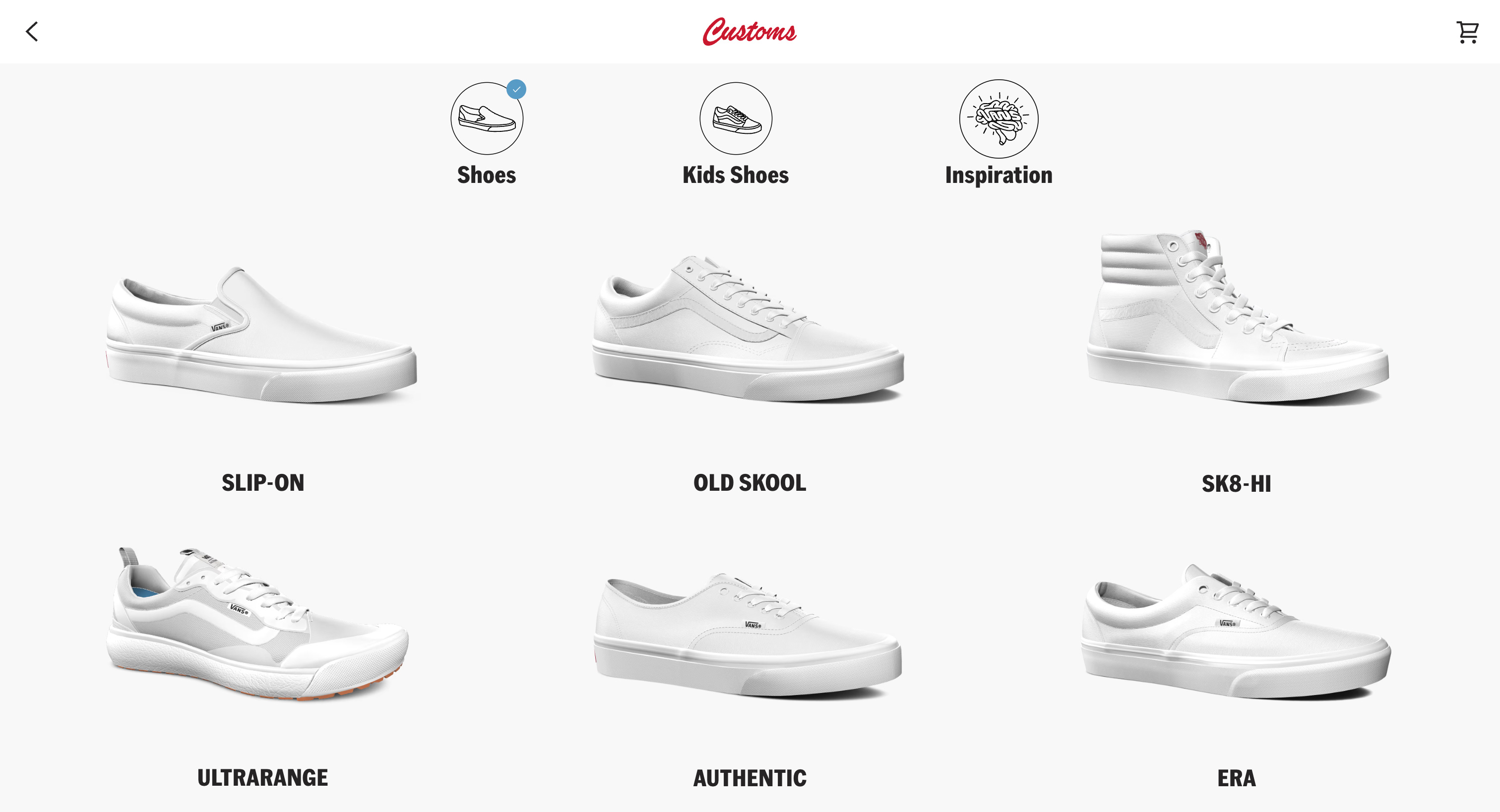
New materials, colors, and prints could be added without the production overhead of pre-rendering. New shoe models could be introduced in a fraction of the time. The platform became something we could continuously evolve rather than rendering hundreds of thousands of images each season.
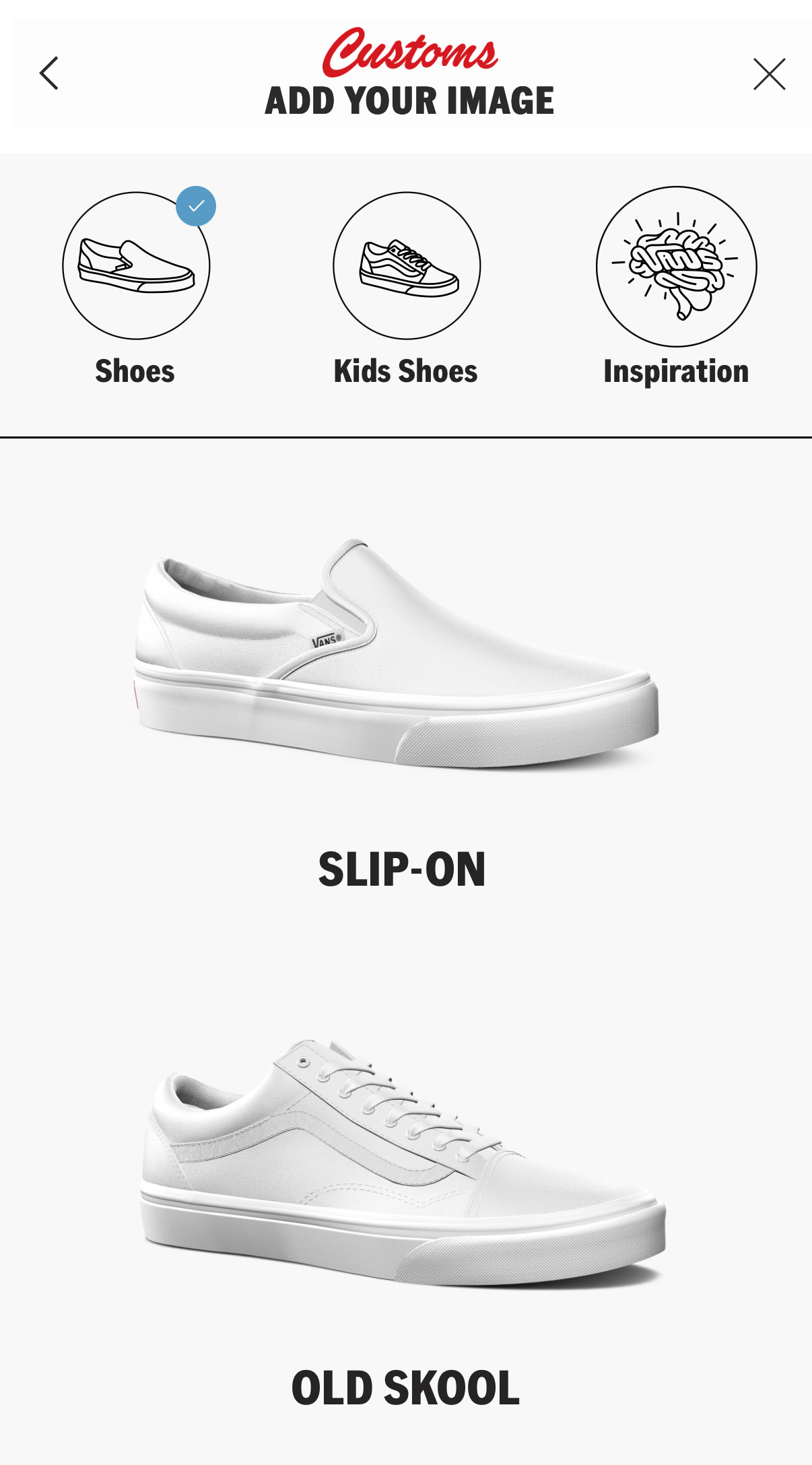
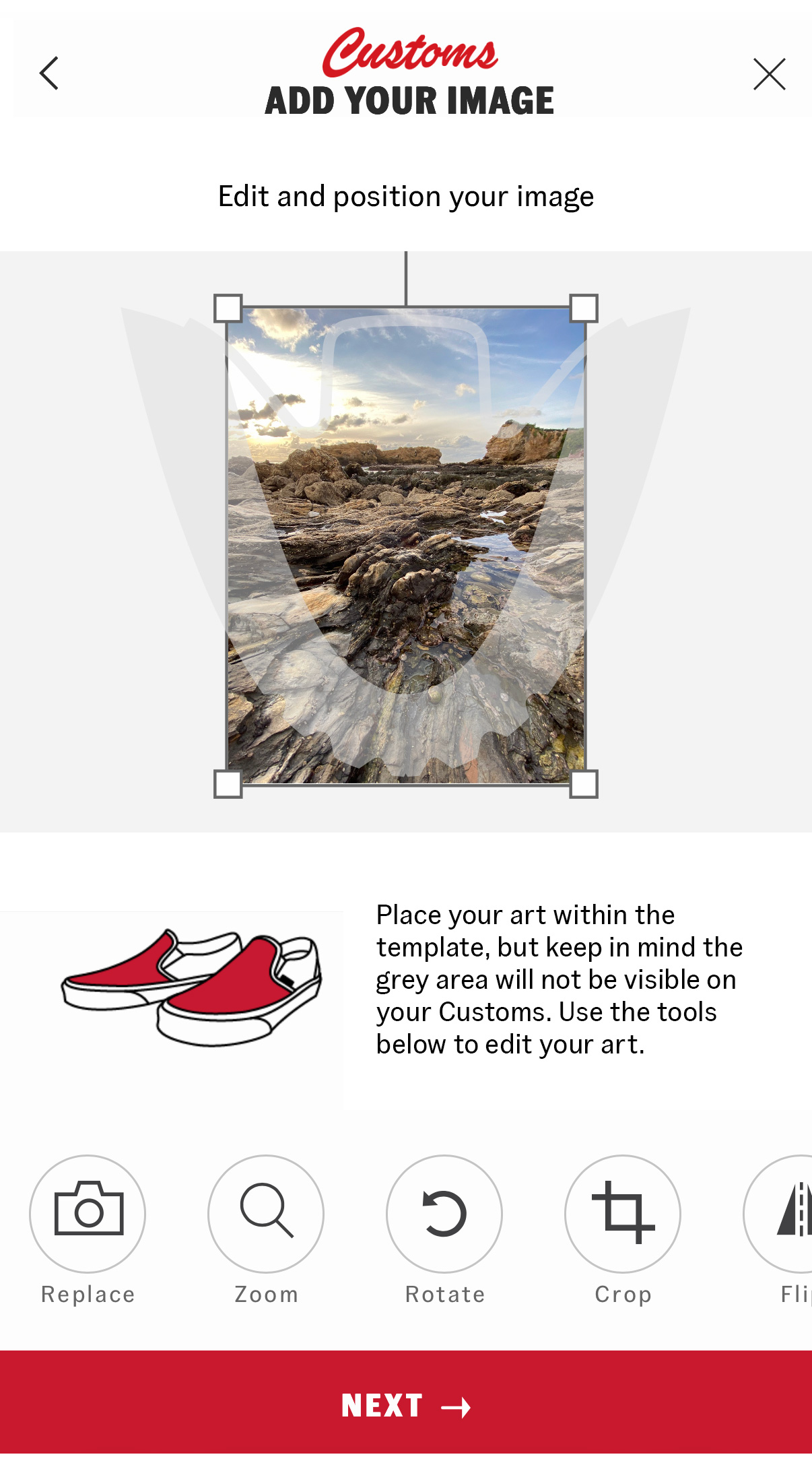
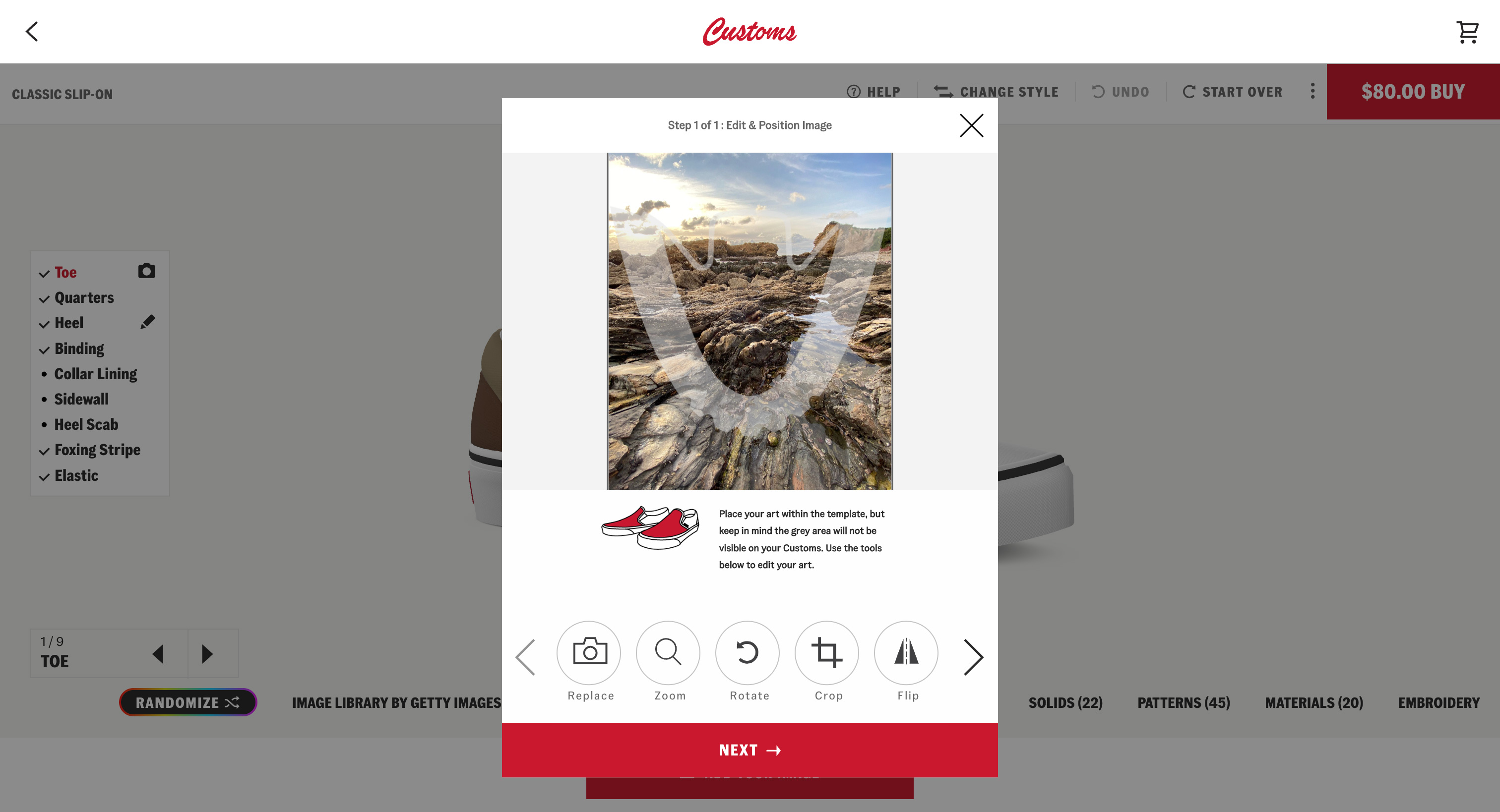
We built on top of that foundation over time, adding tools that pushed creative expression further. Users could upload their own photos and artwork and apply them directly to the shoe. A custom tool called Checkerfy transformed any image into a checkerboard pattern, turning a personal photo into something distinctly Vans. A pattern builder let users design repeating prints from scratch. A randomizer mode generated unexpected combinations for people who wanted to be surprised.
Each tool was an extension of the same underlying bet. A real-time 3D platform could support creative possibilities that a static one never could.
My Role
I led concept, creative direction, and product strategy for Vans Customs from the ground up. That meant making the case internally for the 3D approach, partnering with engineering and global brand leadership to define the platform vision and roadmap, and building and guiding the cross-functional team that brought it to life across multiple product cycles.
We also partnered with an external agency to scale development. Keeping internal teams and external partners aligned around a shared vision, especially on a technically complex project with a long runway, was as much of the work as the design itself.
Impact
• First WebGL 3D shoe customizer in the footwear category
• Drove double-digit growth in engagement and conversion
• Became close to 1/3rd of the overall ecom business
• Reduced time and cost to add new materials, colors, and shoe models
• Became a core commerce platform for Vans, built to grow rather than rebuild
• Established a scalable foundation that supported new tools and global markets over time